Ten Reasons Why CIO (cry-it-out) Is Not Good For Baby:
1. Cry it out can cause harmful changes to babies’ brains
Babies cry. They cry to let us know that they need something. And when we don’t respond to those cries, it causes them undue amounts of stress. Science has shown that stress in infancy can result in enduring negative impacts on the brain. Prolonged cries in infants causes increased blood pressure in the brain, elevates stress hormones, obstructs blood from draining out of the brain, and decreases oxygenation to the brain. Excessive crying results in an oversensitive stress system (likened to a faulty burglar alarm in one book) that can lead to a fear of being alone, separation anxiety, panic attacks and addictions. Harvard researchers found that it makes them more susceptible to stress as adults and changes the nervous system so that they are overly sensitive to future trauma. Chronic stress in infancy can also lead to an over-active adrenaline system, which results in the child using increased aggression, impulsivity, and violence. Another study showed that persistent crying episodes in infancy led to a 10 times greater chance of the child having ADHD, resulting in poor school performance and antisocial behaviour. However, if you consistently soothe your child’s distress and take any anguished crying seriously, highly effective stress response systems are established in the brain that allow your child to cope with stress later in life.
2. Cry it out can result in decreased intellectual, emotional and social development
At an American Academy of Pediatrics meeting, infant developmental specialist Dr. Michael Lewis presented research findings demonstrating that “the single most important influence of a child’s intellectual development is the responsiveness of the mother to the cues of her baby.” More specifically, other studies have found that babies whose cries are ignored do not develop healthy intellectual and social skills, that they have an average IQ 9 points lower at age 5, they show poor fine motor development, show more difficulty controlling their emotions, and take longer to become independent as children (stay clingy for longer).
3. Cry it out can result in a detached baby
Researchers have shown that although leaving a baby to cry it out does often lead to the cries eventually stopping, the cries do not stop because the child is content or the problem has been alleviated. Rather, they stop because the baby has given up hope that a caregiver will respond and provide comfort. This results in a detached baby. Detached children are less responsive, appear to be depressed or “not there” and often lack empathy.
4. Cry it out is harmful to the parent-child relationship
A child that is left to cry it out is less likely to turn to the parents in times of need. Being attended to as a baby is the most basic of needs and if a child learns at that point that she can count on her parents to respond to her needs, then she will also turn to them later in life when she needs their support. But I worry that if I leave my children to cry it out, then they will not see the point in reaching out to us if they have problems later in life and could try to deal with serious issues like bullying, drug addictions, teenage pregnancy, gambling problems, or flunking out of school on their own or turn to peers. Unfortunately, those problems are often too big for a teenager to be left to deal with alone or with peers and it can have disastrous results ranging from making poor decisions all the way to committing suicide out of a feeling of hopelessness.
5. Cry it out can make children insecure
Children whose caregivers are not consistently responsive and sensitive, often become insecure. Long-term studies have shown that secure individuals are more likely to be outgoing, popular, well-adjusted, compassionate, and altruistic. As adults, secure individuals are likely to be comfortable depending on others, can develop close attachments, and trust their partners. Insecure individuals, on the other hand, tend to be unsettled in their relationships, displaying anxiety (manifesting as possessiveness, jealousy, and clinginess) or avoidance (manifesting as mistrust and a reluctance to depend on others). Parents that use the cry it out method often do so because they are afraid that their children are becoming too dependent. However, an abundance of research shows that regular physical contact, reassurance, and prompt responses to distress in infancy and childhood results in secure and confident adults who are better able to form functional relationships.
6. Cry it out often doesn’t work at all
Some babies will not give in. They are resilient or stubborn enough that they refuse to believe that their parents could be so cruel as to leave them to cry to sleep. So instead of whimpering a bit and then drifting off to sleep as some supposed sleep experts would have you believe happens, they end up sobbing and sobbing and sobbing for hours on end. Some end up vomiting. Many end up shaking so hard and become so distraught that once their parents realize that CIO is not going to work, the baby is shaking uncontrollably and hiccuping, too distressed to sleep and too distraught to be calmed down even by a loving parent.
7. Even if cry it out does “work”, parents often have to do it over and over again
I can’t imagine putting my child through one or several nights of inconsolable crying to get her to go to sleep and I certainly can’t imagine having to do it over and over again. However, that is the reality for many parents. I hear people tell me that they always let their child cry for thirty minutes to go to sleep. Or that they have to start the CIO sleep training process all over again after each round of teething, each growth spurt, each developmental milestone.
8. Cry it out is disrespectful of my child’s needs
So-called sleep trainers will tell you that after a certain age, babies do not have any more needs at night. Some claim this is after a few short weeks, others after a few months, others after a year. Regardless of the age that is assigned to that message, to me it seems wrong. I’m an adult and yet there are days when I need someone else to comfort me. If I’ve had a really stressful week at work, if I’ve had a fight with someone that is important to me, if I’ve lost a loved one, then I need to be comforted. But how would I feel and what would it do to our relationship if my husband closed the door and walked out of the room and let me “cry it out” myself? I’m an adult and yet there are nights when I am so parched that I need a glass of water or I am so hungry that I need a snack. I’m not going to die if those needs are not met, but I am going to physically uncomfortable and unable to sleep soundly. If I were to let my child CIO, it would be like saying that his needs are not important and that to me is disrespectful. To quote Dr. William Sears on the sleep trainers, “Parents let me caution you. Difficult problems in child rearing do not have easy answers. Children are too valuable and their needs too important to be made victims of cheap, shallow advice“.
9. Deep sleep from cry it out is often a result of trauma
Babies who are left to cry it out do sometimes fall into a deep sleep after they finally drop off. And their parents and sleep trainers will hail this as a success of the CIO method. However, babies and young children often sleep deeply after experiencing trauma. Therefore, the deep sleep that follows CIO shouldn’t be seen as proof that it works. Rather, it should be seen as a disturbing shortcoming.
10. Our World Needs More Love
Rates of depression are skyrocketing. Violent and senseless crimes are on the rise. As human beings, we need to spend more time being there for each other, showing compassion, nurturing our children. Learning that you can’t count on your parents to be there when you need them is a tough lesson to learn that early in life and can be a root of many of the social problems we are facing today. I want to give my kids every chance possible of escaping depression and staying away from violence. And I’m convinced that nurturing them and responding to their needs at night, as I do during the day, is the first step in the right direction.
To read more, you can go to this link: http://www.phdinparenting.com/2008/07/05/no-cry-it-out/
for the full article, references and related topics.
I am in the process of reading a research article on attachment parenting and will post it, with my thoughts, when I am finished.
I have spent hundreds of hours studying child development, attachment and attachment disorders. Much of this research was completed along side a college professor in the department of sociology. I began studying this topic while completing a volunteer and research-based study abroad. After an additional year of study, I presented my research in a conference for international research studies at the university I was attending. This will probably be my "hill to die on" so to speak, but I can't ignore the mounding research against neglectful parenting practices and I cannot find favor with it. Many theories have surfaced and have claimed various benefits, none of which are proven by peer reviewed research. The harmful effects, however, have been well researched and documented. As one with first-hand experience and as a mother, myself, I can not express enough how important it is to establish the early development of trust between parent and child. Parenting is challenging, it seems on every turn, but our children are worth the effort.

Showing posts with label Sleeping. Show all posts
Showing posts with label Sleeping. Show all posts
Wednesday, October 5, 2011

Tuesday, September 20, 2011
Past One Year
Many people wonder if there is any benefit to breastfeeding a baby beyond one year. Here are some references that might give some helpful info to answer that question. I believe there are many, many, many benefits and they go far beyond just nutrition (though, nutritionally, you can't beat breast milk ;)
These references were collected by Kathy Dettwyler while compiling research for her own studies and published material. Kathy has a Ph.D. in Anthropology and studies breastfeeding and other infant behavior from an anthropological standpoint. I find it very interesting.
http://www.kathydettwyler.org/detrefs.html
These references were collected by Kathy Dettwyler while compiling research for her own studies and published material. Kathy has a Ph.D. in Anthropology and studies breastfeeding and other infant behavior from an anthropological standpoint. I find it very interesting.
http://www.kathydettwyler.org/detrefs.html
Thursday, September 8, 2011
Breastfeeding a Toddler: One Mom's Perspective
A friend of mine passed along this link about a Mom who is breastfeeding her toddler (3 yrs) and she expresses some of her feelings about the experiences she has had doing so. I enjoyed it so I'm passing it on, too.
http://www.kveller.com/blog/parenting/it-may-be-time-to-wean-my-three-year-old/
http://www.kveller.com/blog/parenting/it-may-be-time-to-wean-my-three-year-old/
Tuesday, August 30, 2011
Cloth Diapers for Overnight
This is a link to a shop called Lollidoo which sells cloth diapers and other cloth products. They have a cloth diaper that claims to work overnight. I haven't personally tried it, but I've heard good things and I know a lot of people, whether they use cloth diapers or not, have a hard time with leaks at night. Might be worth a shot.
http://www.lolliplace.com/products/Overnight-eco%252dpocket-%C2%AE-Cloth-Diapers.html
Hope you have a nice dry night. :)
http://www.lolliplace.com/products/Overnight-eco%252dpocket-%C2%AE-Cloth-Diapers.html
Hope you have a nice dry night. :)
Wednesday, August 17, 2011
Book Review
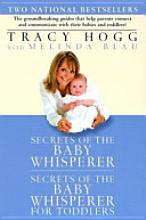
The Baby Whisperer, by Tracy Hogg, is a book that claims to help parents who are unsure how to care for their babies and read their cues. I was reading the book, looking for insights on normal infant sleep patterns. What I found was information on how to get your baby to sleep, eat and play on an adult's schedule. I was kinda disappointed, because I thought this would be a book that was more geared towards Attachment Parenting and would explain the needs of infants... I guess I was mistaken. While she does offer advice on all imaginable topics, and claims her solutions will work for every baby (I'm not a huge fan of the "one-size-fits-all" method) I just didn't feel she was qualified to be so aggressive in her opinions.
For instance, she down plays the benefits of breastfeeding, while suggesting that breastfeeding on demand is not only unnecessary, but creates a demanding, fussy child. I have found the opposite to be true, but regardless, she isn't an Internationally Board Certified Lactation Consultant (IBCLC), so I'd question her knowledge and understanding of successful breastfeeding and wouldn't follow her advice. Her suggestions had breastfeeding failure, written all over them. She also thought it was a good idea to wean babies at around 8 months, which isn't supported by WHO or the AAP... just not good advice.
I also didn't like how she demonized co-sleeping and co-bedding. She blamed these for SIDS and said cribs are where babies should be. What bothers me about that statement is that babies have been in bed with their parents for centuries before this book was written. Even today, nearly all other cultures practice bed-sharing with babies and don't have SIDS rates as high as we do here in the "modern world", in some "less civilized" cultures that practice bed-sharing, SIDS is almost unheard of... And nevermind the fact that SIDS was only recently changed from "Crib Death"....
Another inconsistency was that she recommends parents follow the AAP on their recommendation for when to start solids (6 months) but suggests that "bigger babies" and babies that suffer from GERD should be introduced at 4 months. Again, she really has no authority to be giving such recommendations and this goes against the AAP and other research I have read, so it bothers me that she gives such erroneous advice so willy-nilly.
I try to find the "good" in each thing I read, because I believe one can usually glean something beneficial. Something that I did find that I could agree with her on was her philosophy of not using the Cry-It-Out method (CIO).
I thought she made some good points:
"I don't believe in allowing infants to cry alone, not even for five minutes. Your baby doesn't know where you have gone or why he's suddenly abandoned. To use another analogy, its' as if you have a boyfriend, you set a date, and he doesn't show up for two nights in a row. You wouldn't trust his word. trust is the foundation on which any relationship is built. My hair stands on end when parents tell me they've allowed a baby to cry for an hour, two hours. Some infants get so upset and cry long and hard enough that they vomit. Others simply expend energy, become even more overstimulated, and eventually get hungry as well, leaving both of you confused and exhausted. Many babies who've been left to cry it out become chronically bad sleepers from that point on, putting up a battle whenever it's time for sleep, even becoming fearful of their own beds."
We don't see eye-to-eye on how to teach your baby to go to sleep... She suggests that allowing your baby to co-bed with you will result in a needy, clingy child and I just don't agree. The research doesn't show this to be true, in fact, many studies show the opposite, so we just don't see eye-to-eye on that point.
Another criticism I have with this book is that the Author's tone of voice is very antagonistic and arrogant. She speaks as though she is the best and only expert on babies and it just rubs me the wrong way. My philosophy on the topic of "who knows best?" is that parents usually know best, when they are sincerely seeking to do the best thing for their child. When their heart is in the right place, and they acknowledge and follow their baby's cues, I think the parents are the "experts" for all intents and purposes. And I believe each baby is unique and will march to the beat of a different drum, so I find it silly to be so rigid as to think that each baby should conform to one pattern of behavior.... I think consistency is important but flexibility is, too. She says she believes that but, I'm not convinced.
Well, that's my 2 cents. Hope it helps.
Thursday, August 11, 2011
Book Review
These are a few books that might be worth reading. They have been helpful to some, and they might be helpful for you. I'll be reading and reviewing some books from time to time, and I'll post what I think about them and a brief synopsis.
The 90 Minute Baby Sleep Program - NAPS:

-Basically, the entire idea is that babies are on a 90 minute awake cycle and then need to nap. If you follow this cycle, your baby should go down for naps easily. I can say that I read the book and I think the author might have some interesting points as far as sleep science. When she starts giving advice on breastfeeding and other parenting topics, I kinda lost interest because A) she isn't a certified lactation consultant, so she shouldn't be giving breastfeeding advice B) she states that co-sleeping (which I assume she is meaning c0-bedding) is unsafe without any authority or research to back that up and basically finger wags which I really don't appreciate coming from an ignorant point-of-view and C) she isn't a "parenting expert" so I think she should just stick to her main subject of expertise, which is sleep. I don't think I'd recommend this book to anyone. The synopsis is pretty much all you need. ;)
Here it is:
Baby's need sleep. They need to sleep often. They need help falling asleep. You can do things to help them go to sleep by creating a restful environment. Don't underestimate the benefits of a well-rested child. They are happier and learn better when rested. This makes Mommies happier, too. The end. If you want more factoids (and I am that kinda person, so I understand) then by all means, by the book. Just don't pay full price. It really is worth it to just get a used copy. Borders.com sells used copies, and you can also look at half price books, too.
The next books I plan on reading are: "The Happiest Baby on the Block" by Dr. Harvey Karp and "The Baby Whisperer" by Tracy Hogg
The 90 Minute Baby Sleep Program - NAPS:

-Basically, the entire idea is that babies are on a 90 minute awake cycle and then need to nap. If you follow this cycle, your baby should go down for naps easily. I can say that I read the book and I think the author might have some interesting points as far as sleep science. When she starts giving advice on breastfeeding and other parenting topics, I kinda lost interest because A) she isn't a certified lactation consultant, so she shouldn't be giving breastfeeding advice B) she states that co-sleeping (which I assume she is meaning c0-bedding) is unsafe without any authority or research to back that up and basically finger wags which I really don't appreciate coming from an ignorant point-of-view and C) she isn't a "parenting expert" so I think she should just stick to her main subject of expertise, which is sleep. I don't think I'd recommend this book to anyone. The synopsis is pretty much all you need. ;)
Here it is:
Baby's need sleep. They need to sleep often. They need help falling asleep. You can do things to help them go to sleep by creating a restful environment. Don't underestimate the benefits of a well-rested child. They are happier and learn better when rested. This makes Mommies happier, too. The end. If you want more factoids (and I am that kinda person, so I understand) then by all means, by the book. Just don't pay full price. It really is worth it to just get a used copy. Borders.com sells used copies, and you can also look at half price books, too.
The next books I plan on reading are: "The Happiest Baby on the Block" by Dr. Harvey Karp and "The Baby Whisperer" by Tracy Hogg
Wednesday, August 10, 2011
Sleeping Through the Night....
Did you know that the AAP (American Academy of Pediatrics) defines "sleeping through the night" as a stretch of 5 hours? Not 10 to 12 hours, like some people suggest as "normal" and "expected" for babies. It is normal for babies to wake during the night.
Here is an informative article by an Anthropologist - Katherine Dettwyler Ph.D., who discusses the topic of infants and when they should sleep through the night. I thought it was interesting.
http://www.kathydettwyler.org/detsleepthrough.html
Here is an informative article by an Anthropologist - Katherine Dettwyler Ph.D., who discusses the topic of infants and when they should sleep through the night. I thought it was interesting.
http://www.kathydettwyler.org/detsleepthrough.html
Tuesday, August 9, 2011
Excellent Blog on Healthy Sleep Solutions
I found this blog while searching for info on infant sleep and I am just so happy. This blog contains so much great information! I had to share... Enjoy. :)
http://www.drmomma.org/2009/12/sleep-training-review-of-research.html
http://www.drmomma.org/2009/12/sleep-training-review-of-research.html
"Crying-it-out does not lead to 'sleeping through the night' - it results in learned helplessness."
~ Danelle Frisbie
Monday, May 23, 2011
A Wake Up Story...
I don't know about you, but ever since I found out I was pregnant, I started becoming more aware of what I was putting in my body. I knew everything that entered me, could effect my growing baby, for good or for bad. Once he was born, the awareness didn't cease. I became more aware. More concerned. I worry about what chemicals are in his environment, even in our home, that might be harmful.
I've been reading a lot about SIDS, too. Mostly because I want to know more about it. Also, I have a hard time believing that the answer to preventing SIDS is as simple as placing babies on their backs to sleep. Why, then, do most babies prefer to sleep on their tummies? That seems to defy nature since babies should tend to prefer what is safest for them and will promote survival. I've also found studies that link back sleeping to other problems.... (http://www.ncbi.nlm.nih.gov/pmc/articles/PMC1595182/?tool=pmcentrez)
I'm not saying there isn't validity to the "back to sleep" movement, I'm just questioning, because that's what I do. :)
I want to understand more. To understand more, you question what is "known" and you go from there.
From what I've found, it seems that SIDS is, for the most part, not fully understood. Scientists don't really know 100% what causes it or how to prevent it. There seems to have been a downward trend in SIDS cases since Pediatricians promoted the "Back to Sleep" campaign in the early 90's but there was also a dramatic shift in defining SIDS at that same time and therefore more infant deaths were categorized as "suffocation", "murder" or even "related to other health problems".
These are a few studies I did find. They are all from Pub Med and have been published in quality peer reviewed journals. Always look in well respected peer reviewed journals and focus on studies that are large and randomized. Also, keep in mind that if you do not have a PhD in the subject matter, you will likely be overwhelmed and confused. That is normal. I do not have a PhD and even with a medical background, I find many studies I read to be cumbersome and difficult to understand fully. Most doctors feel this way, too (whether they admit it or not) and that's normal. This is kind of a soap-box-issue for me, but I think we tend to expect too much from doctors. They can't know everything. We can all try to be more educated, though. Its a worthwhile effort to make (I think, anyway).
This one is small. What some researchers would call a "pre-study", but it is interesting, none the less. http://www.ncbi.nlm.nih.gov/pubmed/20092400
This is a "retrospective study" or review of previously collected information. Not truly conclusive but also interesting as a stepping stone towards more research. http://www.ncbi.nlm.nih.gov/pubmed/19414432
This is a "pre-research study" in the gathering information phase. It is worth noting, though, because it is focused on how babies sleeping in the prone (tummy) position may be more susceptible to toxic bacteria exposure. So, if the baby's sleeping arrangement was safer and less prone to bacterial/fungal growth which promotes a toxic environment for the sleeping infant, would it be safe for babies to sleep on their tummies? No conclusions have been made at this time. I would love to see the follow-up on this, though. http://www.ncbi.nlm.nih.gov/pubmed/10443485
Again... not conclusive but interesting points made on the role of bacterial toxins, smoking and genetics all playing a role in the cause of SIDS. http://www.ncbi.nlm.nih.gov/pubmed/10335950
I could list more but the list would go on and on and there really isn't an answer.... So, I'll let you check it out on your own. ;) PUB MED
So, because there are so many variables, it is hard to pinpoint the reason for the decrease in SIDS in the early 90's. And scientists have their hands tied in doing rigorous scientific method-type studies because this would involve infants dying and that would be unethical to allow that to happen. So.... the questions keep piling up and the answers fall short.
In my quest to understand more about SIDS, I stumbled upon an interesting theory. A Chemist in New Zealand hypothesized that babies were dying of SIDS or "Cot Death" not simply because they were on their tummies but because they were sleeping on mattresses that were emitting toxic chemicals that the babies were breathing in which compromised their neurological behavior which stimulates breathing and heart rate regulation. The babies on their tummies were at a higher risk, not because of their tummy sleeping in-and-of-itself, but because this put them closer to the toxic fumes being emitted and thus inhaled. He theorized that the babies on their backs had better air circulation and thus less susceptibility to the toxins. He published his theories and findings in a book and led a campaign in New Zealand for higher safety standards for the manufacturing of infant mattresses.
This made me start to wonder about the mattress my own baby was sleeping on....
I was already interested in getting a newer mattress (the one I have was given to us, generously, but who knows how old it is...) and I was already looking at organic mattresses because I had heard people talking about "all the chemicals in mattresses" so I was concerned.
When I started looking, however, I became increasingly surprised at how few options there truly were for 100% organic crib mattresses.... I could only find one! All the others toting the "organic" label were only part organic (sometimes as little as 5%) and the rest was still full of toxic and potentially toxic chemicals. Did you know that when you buy a new mattress, it is recommended to let the mattress "off-gas" for about a month before using it?! I had no idea!
Here is a link to the Naturepedic website (they make organic crib mattresses) http://www.naturepedic.com/newmom/ebook-naturepedic-crib-mattresses.pdf
Have you ever noticed that nice "new car smell"? That is also known as "off-gasing" and it is literally the release of chemicals into the air from the synthetic (also known as "man made") product.... Whoa. That shocked me.
So... I find myself a little unsure where to turn at this point. I don't want to be one of those parents that is ultra paranoid about every little thing that comes near my child. I don't see myself that way.
I believe that our bodies were created to withstand a lot of toxins and to filter them out just fine. On the flip side, I do believe, as has been evidenced by modern science, that too much toxic exposure is overwhelming to the body and has very negative effects. That's why we see an increase in cancer. That's why people are concerned about the nuclear power plants in Japan after the Tsunami. That's why the FDA regulates consumer products (although, probably not strictly enough) and this is why we should all be careful and educated consumers.
For me, I don't plan on letting myself be overwhelmed by the truth that there are toxic chemicals in our everyday environment. I do, however, plan on making a few changes, continuing to educate myself and I will do my best to limit the large amounts of chemicals we are exposed to daily.
I plan on getting a new mattress that I feel is safe for my baby, because he spends upwards of 12-14 hours a day sleeping on it. I also try to buy toys and dishes that are BPA-free. Occasionally he will have a toy that is not. I'm not going to stress about it. You can't avoid every bad thing in this world, but you can drive yourself nuts trying, in my opinion.
I want to avoid the things that I feel are dangerous but I'm not going to stop "living" or move us all into a "bubble". I just don't think that is realistic or healthy.
This is a video I found at: awakeupstory.org
I thought it was interesting and worth paying attention to.
These are my thoughts. If you have any to share, or helpful ideas/information, I would really love to hear it!
May we all be happy and healthy. :)
I've been reading a lot about SIDS, too. Mostly because I want to know more about it. Also, I have a hard time believing that the answer to preventing SIDS is as simple as placing babies on their backs to sleep. Why, then, do most babies prefer to sleep on their tummies? That seems to defy nature since babies should tend to prefer what is safest for them and will promote survival. I've also found studies that link back sleeping to other problems.... (http://www.ncbi.nlm.nih.gov/pmc/articles/PMC1595182/?tool=pmcentrez)
I'm not saying there isn't validity to the "back to sleep" movement, I'm just questioning, because that's what I do. :)
I want to understand more. To understand more, you question what is "known" and you go from there.
From what I've found, it seems that SIDS is, for the most part, not fully understood. Scientists don't really know 100% what causes it or how to prevent it. There seems to have been a downward trend in SIDS cases since Pediatricians promoted the "Back to Sleep" campaign in the early 90's but there was also a dramatic shift in defining SIDS at that same time and therefore more infant deaths were categorized as "suffocation", "murder" or even "related to other health problems".
These are a few studies I did find. They are all from Pub Med and have been published in quality peer reviewed journals. Always look in well respected peer reviewed journals and focus on studies that are large and randomized. Also, keep in mind that if you do not have a PhD in the subject matter, you will likely be overwhelmed and confused. That is normal. I do not have a PhD and even with a medical background, I find many studies I read to be cumbersome and difficult to understand fully. Most doctors feel this way, too (whether they admit it or not) and that's normal. This is kind of a soap-box-issue for me, but I think we tend to expect too much from doctors. They can't know everything. We can all try to be more educated, though. Its a worthwhile effort to make (I think, anyway).
This one is small. What some researchers would call a "pre-study", but it is interesting, none the less. http://www.ncbi.nlm.nih.gov/pubmed/20092400
This is a "retrospective study" or review of previously collected information. Not truly conclusive but also interesting as a stepping stone towards more research. http://www.ncbi.nlm.nih.gov/pubmed/19414432
This is a "pre-research study" in the gathering information phase. It is worth noting, though, because it is focused on how babies sleeping in the prone (tummy) position may be more susceptible to toxic bacteria exposure. So, if the baby's sleeping arrangement was safer and less prone to bacterial/fungal growth which promotes a toxic environment for the sleeping infant, would it be safe for babies to sleep on their tummies? No conclusions have been made at this time. I would love to see the follow-up on this, though. http://www.ncbi.nlm.nih.gov/pubmed/10443485
Again... not conclusive but interesting points made on the role of bacterial toxins, smoking and genetics all playing a role in the cause of SIDS. http://www.ncbi.nlm.nih.gov/pubmed/10335950
I could list more but the list would go on and on and there really isn't an answer.... So, I'll let you check it out on your own. ;) PUB MED
So, because there are so many variables, it is hard to pinpoint the reason for the decrease in SIDS in the early 90's. And scientists have their hands tied in doing rigorous scientific method-type studies because this would involve infants dying and that would be unethical to allow that to happen. So.... the questions keep piling up and the answers fall short.
In my quest to understand more about SIDS, I stumbled upon an interesting theory. A Chemist in New Zealand hypothesized that babies were dying of SIDS or "Cot Death" not simply because they were on their tummies but because they were sleeping on mattresses that were emitting toxic chemicals that the babies were breathing in which compromised their neurological behavior which stimulates breathing and heart rate regulation. The babies on their tummies were at a higher risk, not because of their tummy sleeping in-and-of-itself, but because this put them closer to the toxic fumes being emitted and thus inhaled. He theorized that the babies on their backs had better air circulation and thus less susceptibility to the toxins. He published his theories and findings in a book and led a campaign in New Zealand for higher safety standards for the manufacturing of infant mattresses.
This made me start to wonder about the mattress my own baby was sleeping on....
I was already interested in getting a newer mattress (the one I have was given to us, generously, but who knows how old it is...) and I was already looking at organic mattresses because I had heard people talking about "all the chemicals in mattresses" so I was concerned.
When I started looking, however, I became increasingly surprised at how few options there truly were for 100% organic crib mattresses.... I could only find one! All the others toting the "organic" label were only part organic (sometimes as little as 5%) and the rest was still full of toxic and potentially toxic chemicals. Did you know that when you buy a new mattress, it is recommended to let the mattress "off-gas" for about a month before using it?! I had no idea!
Here is a link to the Naturepedic website (they make organic crib mattresses) http://www.naturepedic.com/newmom/ebook-naturepedic-crib-mattresses.pdf
Have you ever noticed that nice "new car smell"? That is also known as "off-gasing" and it is literally the release of chemicals into the air from the synthetic (also known as "man made") product.... Whoa. That shocked me.
So... I find myself a little unsure where to turn at this point. I don't want to be one of those parents that is ultra paranoid about every little thing that comes near my child. I don't see myself that way.
I believe that our bodies were created to withstand a lot of toxins and to filter them out just fine. On the flip side, I do believe, as has been evidenced by modern science, that too much toxic exposure is overwhelming to the body and has very negative effects. That's why we see an increase in cancer. That's why people are concerned about the nuclear power plants in Japan after the Tsunami. That's why the FDA regulates consumer products (although, probably not strictly enough) and this is why we should all be careful and educated consumers.
For me, I don't plan on letting myself be overwhelmed by the truth that there are toxic chemicals in our everyday environment. I do, however, plan on making a few changes, continuing to educate myself and I will do my best to limit the large amounts of chemicals we are exposed to daily.
I plan on getting a new mattress that I feel is safe for my baby, because he spends upwards of 12-14 hours a day sleeping on it. I also try to buy toys and dishes that are BPA-free. Occasionally he will have a toy that is not. I'm not going to stress about it. You can't avoid every bad thing in this world, but you can drive yourself nuts trying, in my opinion.
I want to avoid the things that I feel are dangerous but I'm not going to stop "living" or move us all into a "bubble". I just don't think that is realistic or healthy.
This is a video I found at: awakeupstory.org
I thought it was interesting and worth paying attention to.
These are my thoughts. If you have any to share, or helpful ideas/information, I would really love to hear it!
May we all be happy and healthy. :)
Sunday, May 1, 2011
Naptime Difficult?
I have a friend that is very much into attachment parenting and does not use schedules for feeding but she recommended this book to me called "The 90 minute Baby Sleep Program". She was having a hard time getting her 5 month old to take naps during the day - he slept fine at night. I have had a little difficulty with this myself. Colin is pretty good about taking naps but I wasn't sure that I was optimizing his nap time or that he was getting enough nap times during the day. The recommended amount of sleep for a baby at his age (4.5 months) is about 12-14 hours of sleep per 24 hours.
The idea is that you set a timer (or just note the time) when baby wakes up in the morning. You feed, play, change diapers, etc and then when 80 minutes has gone by, you start winding them down. Rock, cuddle, nurse, etc - till baby is asleep. Let baby nap and then when they wake up, whenever that is, start the 90 minutes over.
I've been doing this with Colin (not with perfect accuracy) and it seems to be really working well for us. Just thought I'd pass the idea/book along in case it helps anyone else. :) THIS is the link to Amazon, where you can find the book.
Good luck!
HERE is a great link to Kellymom on the topic of sleep.
The idea is that you set a timer (or just note the time) when baby wakes up in the morning. You feed, play, change diapers, etc and then when 80 minutes has gone by, you start winding them down. Rock, cuddle, nurse, etc - till baby is asleep. Let baby nap and then when they wake up, whenever that is, start the 90 minutes over.
I've been doing this with Colin (not with perfect accuracy) and it seems to be really working well for us. Just thought I'd pass the idea/book along in case it helps anyone else. :) THIS is the link to Amazon, where you can find the book.
Good luck!
HERE is a great link to Kellymom on the topic of sleep.
Friday, April 29, 2011
When will baby "SLEEP THROUGH THE NIGHT"?
Good question.
There are a lot of different theories on this topic and it is pretty widely debated. Bottom line, do what feels right.
And know that baby will sleep through the night when he/she is good and ready...
For those of you at the point where baby DOES sleep through the night but then a month later (or so) he/she starts waking again, wanting to nurse,please know that this is normal. Your 4 month old is not manipulating you. They do not have the developmental capacity to do so. He/She is simply meeting the needs of his/her body. Your baby is likely having a growth spurt OR is simply at the age where they are easily distracted during the day and probably not getting all the calories they need. Starting around 4 months, babies tend to have a hard time focusing on breastfeeding and tuning out all the fun and interesting things going on around them. Night time is when they make up for lost calories they missed during the day. Think about it: night time is quiet, dark and there are basically no distractions!
You can try to help limit this by feeding baby in a quiet, dark room during the day and feeding as often as possible, even if they are short feeds. This will minimize night time feedings to some extent if not all together. (This advice comes from a Certified Lactation Consultant)
For those of you with babies who still insist on getting up during the night to eat, be patient. This too shall pass. :o) I'm right there with ya!
HERE is a great article on this subject.
There is also tons of good info on Kellymom.com, too!
*** Side Note: It might also help you to get more sleep if you bring baby into your room, either in bed or in a crib, so you don't have to trek to another room to get baby in the night for a feeding. The less baby wakes from crying to get fed, the more easily he/she will likely go back to sleep during the night.
The sidelying position can also help you rest/sleep during the night when baby wants to nurse. If you do not feel comfortable in this position, talk to a lactation consultant or someone who has used this position successfully. They may be able to help you figure out how to make it work and it really makes a huge difference, especially during night time feedings. I use it during the day when I need a little rest, too! Its really quite nice.
There are a lot of different theories on this topic and it is pretty widely debated. Bottom line, do what feels right.
And know that baby will sleep through the night when he/she is good and ready...
For those of you at the point where baby DOES sleep through the night but then a month later (or so) he/she starts waking again, wanting to nurse,please know that this is normal. Your 4 month old is not manipulating you. They do not have the developmental capacity to do so. He/She is simply meeting the needs of his/her body. Your baby is likely having a growth spurt OR is simply at the age where they are easily distracted during the day and probably not getting all the calories they need. Starting around 4 months, babies tend to have a hard time focusing on breastfeeding and tuning out all the fun and interesting things going on around them. Night time is when they make up for lost calories they missed during the day. Think about it: night time is quiet, dark and there are basically no distractions!
You can try to help limit this by feeding baby in a quiet, dark room during the day and feeding as often as possible, even if they are short feeds. This will minimize night time feedings to some extent if not all together. (This advice comes from a Certified Lactation Consultant)
For those of you with babies who still insist on getting up during the night to eat, be patient. This too shall pass. :o) I'm right there with ya!
HERE is a great article on this subject.
There is also tons of good info on Kellymom.com, too!
*** Side Note: It might also help you to get more sleep if you bring baby into your room, either in bed or in a crib, so you don't have to trek to another room to get baby in the night for a feeding. The less baby wakes from crying to get fed, the more easily he/she will likely go back to sleep during the night.
The sidelying position can also help you rest/sleep during the night when baby wants to nurse. If you do not feel comfortable in this position, talk to a lactation consultant or someone who has used this position successfully. They may be able to help you figure out how to make it work and it really makes a huge difference, especially during night time feedings. I use it during the day when I need a little rest, too! Its really quite nice.
Friday, March 11, 2011
Its Normal for Baby to Wake During the Night
Did you know that it is totally normal for babies to wake up during the night? Mostly they wake up because they want to eat, but there are other reasons, too. Babies cry and wake up for a reason. This is how they get their needs met.
I'm not a believer in letting baby "cry it out" for two reasons: 1) they are in the developmental stage of trust vs. mistrust. They need their mom and they need to know that she will be there for them. They are used to always having mom around (i.e. 9 months in the womb) and it is normal and natural for them to cry out for comfort and reassurance. (Dad can comfort baby, too!) In college I studied Reactive Attachment Disorder in children and I can tell you from my own observation that children who consistently do not get their needs met when they cry out, do have problems. There is a wide range of consequences but their are consequences. 2) babies need things. They need their diaper changed. They need to eat when their body tells them they are hungry. They need help staying warm or cooling off when they get too hot. They are helpless and therefore cry out for us to meet their needs.
There are many interesting studies on infant sleep patterns. You can read them HERE. I think a lot of what helps us as parents to cope with the many changes a baby goes through is to know what is normal & what we should expect. No two babies are exactly alike, though. As with most things regarding babies, use these recommendations as a guide, not a rule.
Before 6 weeks old, babies should not be sleeping longer than 4 hours at night. If they do, they should be woken up to eat, if mom is breastfeeding as this would greatly effect mom's milk supply in a negative way. After 6 weeks, its really a toss up. Baby may sleep 6 hours a night. Or maybe wake up every 2 hours to eat. Every baby is different and each baby will begin to sleep through the night when they are developmentally ready.
HERE is a great link with information and suggestions on sleeping through the night. Oh, and just FYI, what you have heard about giving babies cereal at night to help them sleep longer isn't true. Kellymom.com has some great links on this topic.
I'm not a believer in letting baby "cry it out" for two reasons: 1) they are in the developmental stage of trust vs. mistrust. They need their mom and they need to know that she will be there for them. They are used to always having mom around (i.e. 9 months in the womb) and it is normal and natural for them to cry out for comfort and reassurance. (Dad can comfort baby, too!) In college I studied Reactive Attachment Disorder in children and I can tell you from my own observation that children who consistently do not get their needs met when they cry out, do have problems. There is a wide range of consequences but their are consequences. 2) babies need things. They need their diaper changed. They need to eat when their body tells them they are hungry. They need help staying warm or cooling off when they get too hot. They are helpless and therefore cry out for us to meet their needs.
There are many interesting studies on infant sleep patterns. You can read them HERE. I think a lot of what helps us as parents to cope with the many changes a baby goes through is to know what is normal & what we should expect. No two babies are exactly alike, though. As with most things regarding babies, use these recommendations as a guide, not a rule.
Before 6 weeks old, babies should not be sleeping longer than 4 hours at night. If they do, they should be woken up to eat, if mom is breastfeeding as this would greatly effect mom's milk supply in a negative way. After 6 weeks, its really a toss up. Baby may sleep 6 hours a night. Or maybe wake up every 2 hours to eat. Every baby is different and each baby will begin to sleep through the night when they are developmentally ready.
HERE is a great link with information and suggestions on sleeping through the night. Oh, and just FYI, what you have heard about giving babies cereal at night to help them sleep longer isn't true. Kellymom.com has some great links on this topic.
Swaddling
For anyone having trouble getting their baby to sleep well, I found this article in the American Academy of Pediatrics Journal, about swaddling to put baby to sleep and help them sleep better. You can read it HERE.
The American Academy of Pediatrics recommends putting baby to sleep on their back until they are physically able to roll back and forth, to prevent SIDS.
The American Academy of Pediatrics recommends putting baby to sleep on their back until they are physically able to roll back and forth, to prevent SIDS.
Subscribe to:
Posts (Atom)