playful

Showing posts with label Product Reviews. Show all posts

Saturday, January 28, 2012

Bumbo Exchange

There have been some growing concerns among parents about the safety of the bumbo because it doesn't have a safety restraint for the child while seated. These concerns have been voiced to the maker of the bumbo but they have refused to add a seat belt-type restraint to increase the safety of their product. Another company, Prince Lionheart, has offered to replace any bumbo with their product called the bebePOD for the cost of shipping. The bebePOD has a safety restraint and straps to attach the seat to a chair for use as a high-chair. If you are interested in making the exchange, the deadline is coming up soon. Your bumbo must be sent and postmarked by January 31st to qualify for the free exchange.

Here is a link to find out more: www.facebook.com/PrinceLionheartFamily?sk=app_10442206389

Friday, December 30, 2011

Artificial Materials and Cloth Diapering

Artificial Materials and Cloth Diapering

by Marc Pehkonen, Lori Taylor
fuzbaby
FireFly Diapers

For centuries, naturally occurring absorbent materials were used for diapering infants. These were probably picked from local fibers, easily available, and could have included materials as diverse as moss and linen. Then, in the 20th century, the amazingly rapid development of artificial materials heralded an almost total switch in the West from cloth diapering to disposables. Highly engineered absorbent gels and processed wood pulp replaced reusable natural fibers. Although the vast majority accepted these changes as the inevitable (and even admirable) progress of technology, a small percentage continued to use cloth diapers.

Perhaps you are among those parents choosing to use cloth diapers because you reject the use of artificial materials. You may be concerned to see that such materials are showing up in popular cloth diapering products. Common man-made materials may be a health threat, including polyester fibers, vinyl and polyvinyl chloride (PVC), polyurethane laminate (PUL), and durable water repellent finishes (DWR).

Introducing Polyester


Polyester was created in a laboratory just 60 years ago, during World War II. It gained popularity as an apparel fiber, particularly in the 1950s, under trade names such as Dacron. It may have become a joke by the 1970s, but it remains, in its various forms, one of the most popular fibers used in clothing.

Polyester is the artificial fiber most commonly blended with cotton, where it is added to reduce cost, speed up drying times, decrease the tendency to wrinkle and improve wear-resistance. Unblended, it is used in a variety of fabrics, including the ubiquitous polyester fleece. In addition, there is a new type of polyester fiber that is made from 100% recycled soda bottles (PET on the bottle stands for polyethylene terephthalate, or polyester). The argument is made that this is a plastic fiber that apparently helps the environment.

You might think, therefore, that water-repellant, 100% recycled polyester fleece would be a good candidate for a diaper cover, and that a soft, poly-cotton blend might make a good diaper. That such a combination would function adequately is not really at issue. The point is that polyester is not the wonder fiber its manufacturers claim.

The use of certain polymeric silicones as cosmetic implants ended in a successful lawsuit against Dow-Corning; the vinyl industry is the subject of mounting litigation (and a critical documentary, the independently-made Blue Vinyl, which aired on HBO in June 2002); and now even supposedly inert polyester is running into trouble.

Researchers at Tufts Medical School noticed that cancer cells being grown in the lab multiplied more quickly in polyester test tubes than in glass. It appears that polyester slowly emits phytoestrogens, which are endocrine disruptors, or compounds similar to estrogen, which can promote certain types of cancer. Enough people are worried about these chemicals that entire conferences are being held to discuss their possible effects. You can see the concerns of the scientific community reflected in this list of topics at a conference being held as we write: http://www.grc.uri.edu/programs/2002/enviend.htm

Polymer Chemistry 101

It is probably a good idea at this point to back up a bit for some chemistry 101. Basic polymer chemistry isn't too complicated, but for most people the manufacture of the plastics that surround us is a mystery, which no doubt suits the chemical producers very well. A working knowledge of the principles involved here will make us more informed users.

Polyester is only one compound in a class of petroleum-derived substances known as polymers. Thus, polyester (in common with most polymers) begins its life in our time as crude oil. Crude oil is a cocktail of components that can be separated by industrial distillation. Gasoline is one of these components, and the precursors of polymers such as polyethylene are also present.

Polymers are made by chemically reacting a lot of little molecules together to make one long molecule, like a string of beads. The little molecules are called monomers and the long molecules are called polymers.

Like this:

    O + O + O + . . . makes OOOOOOOOOOOOOOOO

Depending on which polymer is required, different monomers are chosen. Ethylene, the monomer for polyethylene, is obtained directly from the distillation of crude oil; other monomers have to be synthesized from more complex petroleum derivatives, and the path to these monomers can be several steps long. The path for polyester, which is made by reacting ethylene glycol and terephthalic acid, is shown below. Key properties of the intermediate materials are also shown.

The polymers themselves are theoretically quite unreactive and therefore not particularly harmful, but this is most certainly not true of the monomers. Chemical companies usually make a big deal of how stable and unreactive the polymers are, but that's not what we should be interested in. We need to ask, what about the monomers? How unreactive are they?

We need to ask these questions because a small proportion of the monomer will never be converted into polymer. It just gets trapped in between the polymer chains, like peas in spaghetti. Over time this unreacted monomer can escape, either by off-gassing into the atmosphere if the initial monomers were volatile, or by dissolving into water if the monomers were soluble. Because these monomers are so toxic, it takes very small quantities to be harmful to humans, so it is important to know about the monomers before you put the polymers next to your skin or in your home. Since your skin is usually moist, any water-borne monomers will find an easy route into your body.

Polyester is the terminal product in a chain of very reactive and toxic precursors. Most are carcinogens; all are poisonous. And even if none of these chemicals remain entrapped in the final polyester structure (which they most likely do), the manufacturing process requires workers and our environment to be exposed to some or all of the chemicals shown in the flowchart above. There is no doubt that the manufacture of polyester is an environmental and public health burden that we would be better off without.

You may not feel comfortable putting a potential endocrine disruptor next to your child's most sensitive areas. What about some of the other fabrics and fabric treatments used in cloth diapering?

Vinyl and Polyvinyl Chloride

One widely distributed brand of cloth diapers uses PVC or vinyl for its diaper covers.

PVC is a polymer made from vinyl chloride monomer and often contains harmful phthalates as unbound plasticizers. Before you buy a vinyl diaper cover (or anything else made from PVC, especially for your children) consider some of the information available from the U.S. Centers for Disease Control and National Institute for Occupational Safety and Health on vinyl chloride, the monomer for PVC or polyvinyl chloride. Pay particular attention to the "long-term exposure" sections.

Vinyl baby and children's toys are also very popular, but have raised significant health concerns. Search the U.S. Consumer Product Safety Commission website for references to vinyl, and see also the article in Mothering magazine, Issue #90, Sep/Oct 1998.

The independent documentary film "Blue Vinyl," which aired this spring (2002) on HBO, primarily dealt with the effects of vinyl siding on residential users and the workers who manufacture and install the siding. Remember, a diaper cover is in much closer proximity to more sensitive skin than vinyl siding and can contain the same off-gassing monomers.

Polyurethane Laminate (PUL)

Polyurethane laminate, or PUL, has gained great popularity as a fabric treatment. It is applied to the surface of a porous fabric (usually polyester, but also cotton) to provide a flexible, totally waterproof layer. Ultrex and Extreme, two woven fabrics commonly used in outdoor clothing, are also polyurethane laminates. PUL makes functionally good diaper covers--it is an effective barrier to liquids.

But what are the precursor monomers for polyurethane? Most are based on TDI, or toluene 2,4-diisocyanate, a highly toxic carcinogen. Again the Disease Control and National Institute for Occupational Safety and Health have information about TDI, the polyurethane monomer.

Durable Water Repellant Finish (DWR)

Durable Water Repellant finish is a generic term (rather than a trademark) in the outdoor gear industry for a water repellant surface layer, usually sprayed onto the fabric. This layer does not completely fill all the fabric pores (unlike PUL), so the fabric remains breathable. Goretex is probably the most well-known example of a DWR-treated fabric and its treatment contains a fluorocarbon similar to Teflon. The outdoor clothing manufacturer Patagonia describes their DWR finish as "polyurethane" and recommends re-treating "once per season, or more often if the piece gets a lot of use or washing." (Patagonia Product FAQs)

Patagonia recommends the use of Nikwax for re-treatment, which is based on a compound called ethylene vinyl acetate (EVA), blended with a mineral wax. It also contains small amounts of an acidified zirconium salt of a weak acid (acetic acid) and ethylene diamine tetra acetic acid (EDTA) to stabilize the emulsion. If you are interested in digging deeper, you could even read a patent for Nikwax or any proprietary formulation. (Nikwax patent).

Patagonia suggests re-treatment if the garment is washed frequently. They cannot expect their hiking garments will be washed as often as diaper cover would be. DWR treatment would not be effective as a barrier unless you keep a bottle or can of Nikwax handy to restore your cover every few washes.

So, What's the Harm? What's the Choice?

You might ask after reading all this, so what is the actual risk to our babies and families? What if we use some PUL or DWR or fleece for the outer parts of diapers and covers that don't touch the skin? How much of the monomers are actually given off? Has anyone performed a study on this?

The problem is that we are not aware of any such specific study. What we do know is this: The short-term risks of exposure to all of the chemicals mentioned is well documented. The exposure tests are usually performed on animals, since most people would not willingly submit themselves to those kinds of tests and would certainly not volunteer their children. Then exposure limits are estimated, usually for adult males. In some unfortunate cases, actual exposures from industrial accidents and the like have been used to refine these limits.

The effects of long-term exposure are more problematic to predict than short-term; often symptoms take years, or even generations, to show up. Long-term studies of the effects of all the monomers mentioned in this article are still underway. Remember also that these chemicals may respond very differently when used for diapering--the long-term studies are considering only the action of these chemicals in water or air. The presence of urea, ammonia, and the salinity of urine may alter the behavior of monomers in unpredictable ways. In the meantime, wool, hemp, and cotton, particularly when grown and processed organically, are not carcinogens.

The main focus here has been the possible health risks of using these materials. Remember also, that continuing to use these materials supports the industries that produce them. That means continued consumption of the world's oil, mineral and energy resources and continued pollution of our air and water. It also means continued exploitation of chemical workers around the world, especially in countries with low safety standards. The fate of these materials after we are done using them also needs to be considered. Are they biodegradable, reusable, recyclable?

There are many reasons to consider the natural alternatives to artificial materials. Wool is breathable, and micro-absorbent, and naturally moisture repellant (but can be treated with lanolin if necessary, but please don't use Nikwax, despite manufacturer recommendations). Wool makes wonderful diaper covers. Cotton and hemp are both highly absorbent and hemp especially can be grown easily without pesticides, herbicides and fertilizers. Cotton is not so easy to grow organically, but every year more acres are being converted from conventional production. It is becoming widely available as a diapering fabric. Ask for organic cotton specifically.

As you can see, there's no good reason to use petroleum-based products like polyester, PUL or PVC in your child's diapers when natural fibers work so well and pose no health risks. Choose natural materials, manufactured with minimal processing under fair labor environments.


http://www.diaperpin.com/clothdiapers/article_artificialmaterials.asp

Saturday, December 24, 2011

Treatment for Colic

There has been a lot of research, recently about possible causes of colic and how to best treat them. Many scientists now believe that colic has roots in digestive upset. An article in the NY Times was published not too long ago about the possible benefits of using probiotics for infants to help treat colic symptoms.

http://www.nytimes.com/2011/02/15/health/15really.html?_r=1&ref=health

Wednesday, November 23, 2011

Play Mats - Safe?

I saw this article and it made me start to question whether or not the play mat that I have is really safe...

Belgium is to ban the sale of all foam puzzle mats for babies and toddlers, citing tests showing they contain a cancer-causing chemical.

Formamides are used to soften the foam in the mats but are corrosive and can be deadly. Toxicologist Alfred Bernard explained:
“They are solvents, residues from the manufacturing process that stay in the product afterwards. They can be absorbed through breathing or through the skin. As a rule, children should not be exposed to these products.”

Belgium becomes the first European country to ban the mats and will impose a 20,000 euro fine for anyone found selling them. Jean-Philippe Ducart, a spokesman for a consumer watchdog said:

“They will be illegal in 2011 but in the meantime we ask that they be withdrawn from the market in the interest of public health and the health of children exposed to them.”

An EU-wide ban on the mats is expected within the next few years.

http://www.euronews.net/2010/12/11/belgium-bans-toxic-children-s-puzzle-mats/

Monday, November 14, 2011

The "What to Expect" Series Revihttp://www.blogger.cohttp://www.blogger.com/img/blank.gifm/img/blank.gifew

The "What to Expect" Series
by Arlene Eisenberg, et al

comments by Kelly Bonyata

The "What to Expect" Series includes the books What to Expect When You're Expecting, What to Expect the First Year and What to Expect the Toddler Years (plus some related books like What to Eat When You're Expecting, and so on).

Update: I've just looked through some of the breastfeeding information in the Third Edition (2002) of What to Expect the First Year. All in all, the general breastfeeding information is significantly better than in the first edition, but quite a number of inaccuracies and misinformation remain scattered throughout. The authors seem to have pushed their comfort level for breastfeeding up to around a year, but they continue to perpetuate myths such as breastfeeding being "exhausting" for mom, particularly when it comes to breastfeeding past a year. In addition, the moms whom I have worked with continue to mention that they go to the book with a question and come away feeling worried, inadequate and guilty.

The book What to Expect the Toddler Years (which has not been updated since the first edition) is very negative when it comes to breastfeeding a toddler, with many comments similar to the ones quoted below from the First Edition of What to Expect the First Year.

The first editions of the books (I've read through the pregnancy, first year and toddler books), give lip service to breastfeeding in the early months (though much of the info is quite outdated), but gets less and less supportive of breastfeeding as babies pass 6 months. Weaning is suggested well before 12 months. The authors also advocate letting baby cry (to do otherwise is "cowardly") and are very much against co-sleeping. Here is a quote from What to Expect the First Year (first edition):

By the end of the first year, however, scientists tell us that breast milk ceases to be adequate--not only is its protein content is insufficient for the older baby, but it suffers from a decline in several vital nutrients including zinc, copper, and potassium. In the second year, infants require the nutrients in cow's milk, and the mother who is still breastfeeding should recognize that although both she and her baby may still be enjoying the experience, breast milk can't be considered a major source of nutrition for her baby. Nor do babies past a year appear to need the sucking breast feeding provides. In spite of much speculation, there's no solid evidence that nursing past the first year--or even well into the second or third or beyond--hinders a child's emotional development. But it does seem that prolonged breastfeeding, like prolonged bottlefeeding, can lead to dental decay.

These statements are so full of misinformation, it's hard to know where to start! See Extended Breastfeeding Fact Sheet for referenced infomation on the nutritional and many other benefits of breastfeeding during the second year and beyond... Cow's milk is certainly not needed for anyone but baby cows... Some babies have breastmilk as their main source of nutrition well into the second year... There are many studies that show that the sucking need (as exhibited through continued pacifier, finger or thumb sucking) persists for several years in many children, with most stopping by age 4-5... There is good evidence that nursing into the second and third year (and beyond) has psychological benefits... There is no evidence that there is a link between extended nursing and dental decay...


http://www.kellymom.com/store/reviews/review_whattoexpect.html

Sunday, November 6, 2011

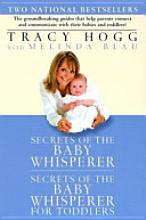
The Baby Whisperer... a review

I found this great review from kellymom.com, on the book: "The Baby Whisperer" by Tracy Hogg. I couldn't have said it better. :)

http://kellymom.com/store/reviews/review_babywhisperer.html


Secrets of the Baby Whisperer: How to Calm, Connect, and Communicate with Your Baby
by Tracy Hogg, with Melinda Blau
Ballantine Books, New York
ISBN: 0345440757
reviewed by Mary Tatko

The first time I read Dr. William Sears' warning against "baby trainers," I couldn't help picturing a man in a top hat sending beleaguered babies through a series of hoops. Now I can replace that image with the smiling face of "Baby Whisperer" Tracy Hogg, the apparent ringmaster in today's world of baby trainers.

In Secrets Of The Baby Whisperer: How To Calm, Connect, And Communicate With Your Baby, Hogg and co-author Melinda Blau promise to help new parents maintain balance by preventing a newborn from dominating their lives.

Sorting fact from opinion from flat-out fiction in this book's nearly 300 pages is something no new parent should have to do. But parenting advice sells, a fact attested to by the book's New York Times bestseller status, so you can bet plenty of moms and dads are trying out Hogg's suggestions.

Of course not all her advice contradicts the basics of attachment parenting (which itself is a parenting style that varies from family to family). And I share her fondness for such things as cloth diapers and infant massage. But so much of what Hogg serves up as wholesome, commonsense guidance for mums and dads (she hails from the U.K. and likes to play up her "Englishness") is so obviously counter to natural parenting, and breastfeeding in particular, that this book should come with a warning label.

The backbone of Hogg's parenting system, a "structured routine" she calls E.A.S.Y., has four components: the amount of time she prescribes for eating (25 to 40 minutes every 2 � to 3 hours), activity (45 minutes), sleeping (one half to one hour), and you (an hour or more for mom while the baby sleeps). While she acknowledges that the exact amount of time will vary from baby to baby and with the baby's age, she makes it clear that following a schedule such as the one she outlines is crucial to preventing "chaos in the house."

When she lays out the case for her E.A.S.Y. parenting routine, Hogg takes a couple of paragraphs to dismiss rigid schedules and on-demand feeding, setting herself up as a champion of the reasonable middle ground between these two "extremes."

When Hogg states that feeding on demand simply makes babies demanding and that parents who do so will be giving up their own lives, anyone who knows what attachment parenting is and is not probably will put the book down.

Those who keep reading should, as Hogg herself recommends more than once about other people's advice, take what they read with a grain of salt.

On the issue of breastfeeding, Hogg again plants herself on self-proclaimed middle ground. She laments the "controversy" over feeding choices and sympathizes with new moms who must wade through "huge propaganda campaigns." (I would think her attempt to equate the efforts of volunteer organizations such as La Leche League with the money-driven marketing of formula companies must be insulting to many readers, regardless of their feeding choices.)

Even as Hogg congratulates herself on her "even-handedness," she manages to vastly understate the benefits of breastfeeding while giving considerable ink to the merits of formula, which, she informs us, "is more refined and chock-full of nutrients than ever."

The section of her book titled "Making the Choice" reads more like a defense of formula than an objective overview of feeding choices. Among other things, she poo-poos bonding as a reason to breastfeed, complains that the health benefits of breast milk have been overblown, warns that nursing mothers must carry an extra five to 10 pounds to ensure proper nutrition for their babies, makes a point of emphasizing that studies merely suggest - not prove - that breastfeeding might offer women protection from a variety of health problems, and maintains that women concerned about body image might be better off using formula since breastfeeding can leave them "flat as pancakes" or "sagging."

Hogg seems so eager to make up for the breastfeeding advocates who are, she implies, out to make mothers who choose formula feel guilty, that she can't seem to discuss breast milk without plugging formula in the same breath:

"The proverbial bottom line is that while it is good for a baby to have some breast milk, especially during the first month, if that's not the mother's choice or if for some reason the mother can't breastfeed, formula-feeding is a perfectly acceptable alternative - for some, the preferable alternative."

When it comes to the practical how-to's of breastfeeding, Hogg provides nuggets of accurate information, but she offers up numerous duds as well, including such incorrect or incomplete information as:

  • "After breastfeeding, always wipe off your nipples with a clean washcloth. The residue of milk can be a breeding ground for bacteria ." (Just not true; there is no need to wipe your nipples after every feeding.)

  • ". always wait one hour (after exercising) before breastfeeding." (The lactic acid buildup she's warning about has not been shown to cause harm, and though some babies seem to dislike the taste of mother's milk after heavy exercise, many babies show no aversion whatsoever.)

  • And for a mother worried she isn't producing enough milk: "Once a day, fifteen minutes before a feed, pump your breasts and measure what you are yielding. Taking into account that a baby can extract at least one ounce more by physically sucking at your breast, you have a good idea of what you're producing." (While this test might work well for some mothers, it can be misleading for others. Many mothers find that, though they get very little milk when they pump, their babies are getting plenty at the breast. Weight gain and the number of wet diapers a baby produces are better measures of milk production.)

Another low point in the book is Hogg's take on nursing toddlers: "My feeling is that when mothers prolong nursing, it's almost always for them, not for the baby." She follows this statement with an anecdote about a mother who was (gasp!) still nursing her two-and-a-half-year-old. Because her husband was not supportive, she was doing so behind his back - obviously not a good situation. To make a long story short, the mother came to her senses, weaned the baby, and "was automatically a better parent, a better wife, and a stronger human being."

The strangest line of thinking comes in a sidebar titled "Feeding Fashions" in which Hogg points out that, though breastfeeding is "all the rage" today, "in the postwar decades . the majority believed that formula was best for babies." She fails to mention the reasons for formula's rise, the consequences of the trend, or that the world health community now is in near-unanimous agreement that breast milk is best. Instead she shares this bizarre thought:

"As this book is being written, scientists are experimenting with the notion of genetically altering cows to produce human breast milk. If that happens, perhaps in the future everyone will tout cow's milk."

Hogg goes on to quote a 1999 article from the Journal of Nutrition that suggests formulas may one day be so advanced they will meet babies' needs better than human milk.

I'm not sure where to file that last bit of information, but there is at least one thing this book makes clear: If you're looking for a baby trainer, you can skip the circus and turn instead to Tracy Hogg. If it's accurate parenting information you seek, look elsewhere.

-- Mary Tatko is the stay-at-home-mom of 19-month-old Jake.

Mary comments:

As you can see, I mainly focused on the chapter about feeding choices, though there was plenty I could take issue with in her chapter on sleep. As you might imagine, Hogg is not a fan of shared sleep. She sets up her recommendations about sleep in the same way she takes on other issues: She dismisses those whose views are "extreme," then presents what she claims is a "middle-of-the-road, commonsense approach." When she's getting ready to pitch her system for "sensible sleep," she cites Dr. Sears, La Leche League, and "Mothering" magazine as the extremes on the family bed side of the issue. (Dr. Ferber is her example of the other side.) And while she encourages those for whom such practices work to "by all means stick with it," she warns that "extreme practices don't work for many people."

Wednesday, October 19, 2011

When Baby is Sick...

My baby is sick - should I continue to breastfeed?

(all the links work except camphor hepatoxicity which links to a published journal article requiring access)

By Kelly Bonyata, IBCLC

Absolutely! Anytime a sick baby is able to take anything by mouth, it should be his mother's milk. Mom's milk provides antibodies specifically tailored to fight baby's illness, and is quickly and easily digested.

Temporary weaning, besides depriving baby of antibodies to fight the illness and the most easily digestible food source available, can make life miserable for both mother and baby. Nursing is extremely comforting to an ill baby and a major part of the healing process. Mom would have to pump to maintain milk supply and then there would still be some risk that supply would drop somewhat. Not pumping would put mom at risk for breast infection and extreme discomfort.

Colds and congestion

If baby has a cold and is congested, it can make breastfeeding difficult. However, it is almost always easier for a sick baby to nurse than to take a bottle. If your baby has a stuffy nose and is having a hard time breathing and nursing at the same time, try the following:

  • Keep baby as upright as possible while nursing (this link includes pictures). At night, try propping up on lots of pillows and nursing/sleeping semi-upright. Also try the Australian position (mom is "down under") - in this position, mom is lying on her back and baby is on top (facing down), tummy to tummy with mom.
  • The best thing you can do to help baby's illness end quickly is to nurse often - that way she gets lots of the antibodies that your body is making to help her fight off the illness. Frequent nursing also helps to ensure that baby is getting plenty of milk (congested babies often nurse for shorter times since it's hard to breathe and nurse at the same time).
  • Use saline drops (or breastmilk) & a rubber suction bulb to clear baby's nose before nursing (if baby won't tolerate the bulb syringe, then the saline drops/breastmilk alone should still help).
    • Put baby on your knees, face up and tilt your knees a little downhill (so baby's head is angled away from you, toward the floor).
    • Put 2-3 drops of saline in each nostril and let it sit for a minute or so.
    • To suction the mucus out, squeeze the bulb part of the syringe first, gently stick the rubber tip into one nostril, then slowly release the bulb.
    • If baby is really congested, you may have to do this several times a day. Do it BEFORE baby nurses; if you do it afterwards your baby may spit up everything she's eaten because syringing can stimulate the gag reflex.
    • To prepare saline drops at home, dissolve one teaspoon of salt in two cups of warm water.
  • Run a vaporizer or humidifier, preferably in a small closed room.
  • Boil a pot of water (some moms use small crock pots/potpourri pots), remove from the stove and add a few drops of essential oil (for example, eucalyptus, sage or balsam), and let the scent permeate the air. This may help relieve some head congestion.
  • Do NOT apply products containing peppermint oil, camphor or menthol on the face (especially in the nose) or chest of a baby or young child. There have been cases where the direct application of menthol or camphor products (for example, Vicks VapoRub™) to baby's skin resulted in severe breathing difficulties or liver problems (see Camphor Hepatoxicity, Camphor Monograph and Menthol Toxicology).
  • Nurse in a steamy bathroom. To pump up the steam, run a really hot shower and set a chair outside the shower for nursing.
  • The US Food & Drug Administration (FDA) and the American Academy of Pediatrics strongly recommend that children under the age of six not be given over-the-counter cough or cold medicines due to the risk of serious and life-threatening side effects. There is also no evidence that over-the-counter cold meds actually benefit children younger than six years old. There are several well controlled studies where there has been no difference shown between children given medication and those who have not.

Sometimes moms are advised to limit or discontinue breastfeeding because milk increases mucus production. This is not good advice for two reasons:

  1. You are not a cow and your milk is not a dairy product. So even if dairy is a problem, your milk would not be.
  2. In addition, there is no scientific evidence that cow's milk results in the production of more mucus unless you are allergic to dairy products. See this page for more info.

Baby refuses to nurse when sick

Some babies may refuse to nurse when sick (particularly if something like a sore throat or pressure from an ear infection makes nursing painful for baby). If this happens, try different nursing positions - particularly those where baby is upright - and keep offering to nurse at least every hour or so. See also: What to do about a nursing strike. Rest assured that your baby will return to nursing when he feels better. Here are some things to try if baby is too uncomfortable to nurse:

  • feed baby expressed milk from a cup, dropper, spoon or syringe
  • try momsicles, or freeze your milk until it's slushy and let baby eat it with a spoon
  • for older babies (over six months) who are eating solids: if baby will take solids but not nurse, add lots of breastmilk to the solids. You might also try making yogurt from breastmilk.

Vomiting and Diarrhea

Another time when moms can be unsure about whether to continue nursing is when baby has diarrhea or is vomiting. Frequent and loose stools in a breastfed baby is not necessarily diarrhea. Here is more information on normal stooling patterns for breastfed babies: What Are Baby's Stools Supposed to Look Like? Diarrhea in a breastfed baby is diagnosed when a baby has 12-16 stools per day (or more often than the baby's regular stool frequency), watery stools, and an offensive odor to the stools. Just one of these symptoms does not in itself mean the baby has diarrhea.

The current recommendations when vomiting or diarrhea is present in the breastfed child are as follows:

  • Breastfeeding should be the FIRST choice if your child can take anything by mouth. Because of the ease and rapidity with which breastmilk is digested, even if your child vomits or stools shortly after nursing, he will still have retained some of the nutrients. Other foods that are often suggested (such as Pedialyte, sports drinks, gelatins and sodas) offer little nutritional value and none of the antibodies that human milk contains.

  • When your breastfed child is ill you'll want to offer more frequent feedings -- this can limit the volume taken in at one time and helps to comfort and soothe a sick child. If your child is vomiting often and not keeping the milk down for long, it may be helpful to breastfeed frequently but limit the length of each nursing session (so your child takes in less milk at once). Another option is for Mom to express some milk before breastfeeding so that the milk flow is slower. RARELY does the baby who is allowed to breastfeed at will during a vomiting or diarrhea illness become dehydrated.

The use of an oral rehydration therapy such as Pedialyte is a sound recommendation for a formula-fed infant who is vomiting or who has diarrhea, but using this in place of breastmilk offers no benefit to the breastfed baby. Human milk is a natural fluid, unlike formula and other milk products, that again is easily and rapidly digested.

Forego the Pedialyte as long as baby continues to nurse well and as long as there are no signs of dehydration. If baby is showing signs of dehydration, talk to your doctor. Following are signs of dehydration:

  • fewer than 2 wet diapers in a 24-hour period
  • baby not behaving normally (more irritable, less active, sleeping more)
  • lethargy
  • listlessness
  • weak cry
  • no tears (in an infant older than 3 months)
  • dry mouth
  • skin that stays wrinkly-looking when pinched (pull up the skin on the front of the hand; it should pop easily back into place - not stay pinched or wrinkly-looking)
  • eyes that look sunken
  • cool, clammy extremities, especially the fingers and toes
  • fast breathing, or a heart that is beating faster than usual
  • fever

Babies who are allowed to continue breastfeeding through an illness such as this are less likely to become dehydrated than those who are taken off the breast. Continued nursing also provides your child with precious antibodies that will prevent the illness from worsening and speed healing. Nursing is also very comforting to your child, which is healing in itself.

Breastfed babies sometimes need oral rehydration therapy (Pedialyte, etc), though far less often than artificially fed infants. The World Health Organization recommends continuing to breastfeed during and after oral rehydration therapy. Research shows that babies lose more weight and actually have more stools during diarrhea when they are deprived of breastmilk.

Sometimes moms are recommended to withhold breastmilk "because it is a dairy product." Breastmilk is NOT considered a dairy or milk product (mom is not a cow!).

Anytime there is diarrhea (in adults as well as babies) it can take a while for the bowel to heal and the stools to get back to normal. So even if you identify the problem and take corrective action, you may not see favorable results for a few weeks. This is because if the bowel gets irritated it is harder for the bowel to digest lactose - the undigested lactose then actually creates more irritation and runny stools... it can be tough to turn around at times. There is usually an inflammatory response with diarrhea - that is the part that takes time to heal. When the cause of the problem is removed (when baby recovers from the illness), the gut will heal even if the baby is still fed breastmilk. More here on secondary lactose intolerance.

Breastmilk vs. Pedialyte

When baby is sick, moms are sometimes told to discontinue or restrict breastfeeding and substitute an oral rehydration therapy such as Pedialyte. This outdated practice has been shown to offer no benefits to the breastfed baby, and can even delay healing.

Your milk has four things that your baby needs even more than usual when he's sick:

  1. Antibodies to fight this illness - you want baby to get as much of these as possible. Encourage *more* nursing rather than less. Pedialyte has no antibodies.
  2. Liquids to keep baby hydrated. Your baby may not be eating as much because he doesn't feel well. Sick babies are more likely to nurse than to take anything else by mouth, so nursing is important to keep baby hydrated. Keeping baby well hydrated also helps keep the mucus secretions thinned out if baby has a cold or other congestion. So again, you want to nurse *more*. Pedialyte will keep baby hydrated, but so will breastmilk.
  3. Concentrated nutrients. Breastmilk is easily and quickly digested, so baby gets more nutrients and absorbs them faster. Pedialyte will keep baby hydrated but has little nutritional value. Again, it's best to nurse *more* since baby may not be eating as much if he feels bad.
  4. Comfort. Sick babies need more comforting - what better way to do this than at the breast?

See the section above for more information on the use of Pedialyte in breastfed babies - Breastfed babies sometimes do need oral rehydration therapy (Pedialyte, etc), though far less often than artificially fed infants. The World Health Organization recommends continuing to breastfeed during and after oral rehydration therapy.

Here is the link: http://kellymom.com/health/illness/baby-illness.html

Page last modified: 11/09/2010
Written: 02/23/2002

Friday, September 2, 2011

Baby Carrier - Hot Sling & Ring Sling

I have been dabbling in making some simple baby carriers. I can sew, decently, so these are all pretty easy patterns to follow.

Here is one that is similar to a Hot Sling:
http://www.ida.net/users/stace/sling.html

This is a discussion board that I thought had some helpful information for a beginner:
http://www.mothering.com/community/t/528506/can-i-make-my-own-hotsling

And here is a link for a ring sling pattern:
http://www.mayawrap.com/n_sewsling.php
The background doesn't go with the text font very well, so its a little difficult to read, but good instructions.

Here is where I purchased my rings for the ring sling:
http://www.slingrings.com/index.php
These rings are very affordable and quality rings - metal or acrylic

To give you an idea on cost, I paid $9 for my rings (but I accidentally bought two sets, so it would have been just under $5... only order ONE from slingrings.com - their wording is a tad confusing) and I had the fabric on hand. You need about 2 yards of fabric for the ring sling. It only requires being able to sew a straight line so its pretty easy. I usually find my cotton fabric at Joann's or Hobby Lobby and use a coupon to get it for about $2-5/yard.

The hot sling-type, I also had extra fabric on hand so it didn't cost me anything. I would guess you would need about a half a yard, one yard, max. So, that would still be pretty inexpensive. Its pretty much just sewing a straight line - pretty easy, even for a novice like me.

I'll try to add pictures later, once baby is awake and can model for me. ;)

Tuesday, August 30, 2011

Cloth Diapers for Overnight

This is a link to a shop called Lollidoo which sells cloth diapers and other cloth products. They have a cloth diaper that claims to work overnight. I haven't personally tried it, but I've heard good things and I know a lot of people, whether they use cloth diapers or not, have a hard time with leaks at night. Might be worth a shot.

http://www.lolliplace.com/products/Overnight-eco%252dpocket-%C2%AE-Cloth-Diapers.html

Hope you have a nice dry night. :)

Friday, August 26, 2011

Best & Worst

This is a link to healthychild.org that has a break down of the best & worst carseats for children, based on chemical exposure. This does not rank the carseats based on crash safety testing - only chemical & toxin exposure. It might be helpful, when narrowing your choices based on crash safety, to then narrow even further by toxic/chemical safety. It helped me so I thought I'd just pass along the info.

http://www.healthystuff.org/pressimages/rawimages/Best-Worst-Car-seat-list.jpg


Wednesday, August 17, 2011

Book Review


The Baby Whisperer, by Tracy Hogg, is a book that claims to help parents who are unsure how to care for their babies and read their cues. I was reading the book, looking for insights on normal infant sleep patterns. What I found was information on how to get your baby to sleep, eat and play on an adult's schedule. I was kinda disappointed, because I thought this would be a book that was more geared towards Attachment Parenting and would explain the needs of infants... I guess I was mistaken. While she does offer advice on all imaginable topics, and claims her solutions will work for every baby (I'm not a huge fan of the "one-size-fits-all" method) I just didn't feel she was qualified to be so aggressive in her opinions.

For instance, she down plays the benefits of breastfeeding, while suggesting that breastfeeding on demand is not only unnecessary, but creates a demanding, fussy child. I have found the opposite to be true, but regardless, she isn't an Internationally Board Certified Lactation Consultant (IBCLC), so I'd question her knowledge and understanding of successful breastfeeding and wouldn't follow her advice. Her suggestions had breastfeeding failure, written all over them. She also thought it was a good idea to wean babies at around 8 months, which isn't supported by WHO or the AAP... just not good advice.

I also didn't like how she demonized co-sleeping and co-bedding. She blamed these for SIDS and said cribs are where babies should be. What bothers me about that statement is that babies have been in bed with their parents for centuries before this book was written. Even today, nearly all other cultures practice bed-sharing with babies and don't have SIDS rates as high as we do here in the "modern world", in some "less civilized" cultures that practice bed-sharing, SIDS is almost unheard of... And nevermind the fact that SIDS was only recently changed from "Crib Death"....

Another inconsistency was that she recommends parents follow the AAP on their recommendation for when to start solids (6 months) but suggests that "bigger babies" and babies that suffer from GERD should be introduced at 4 months. Again, she really has no authority to be giving such recommendations and this goes against the AAP and other research I have read, so it bothers me that she gives such erroneous advice so willy-nilly.

I try to find the "good" in each thing I read, because I believe one can usually glean something beneficial. Something that I did find that I could agree with her on was her philosophy of not using the Cry-It-Out method (CIO).

I thought she made some good points:

"I don't believe in allowing infants to cry alone, not even for five minutes. Your baby doesn't know where you have gone or why he's suddenly abandoned. To use another analogy, its' as if you have a boyfriend, you set a date, and he doesn't show up for two nights in a row. You wouldn't trust his word. trust is the foundation on which any relationship is built. My hair stands on end when parents tell me they've allowed a baby to cry for an hour, two hours. Some infants get so upset and cry long and hard enough that they vomit. Others simply expend energy, become even more overstimulated, and eventually get hungry as well, leaving both of you confused and exhausted. Many babies who've been left to cry it out become chronically bad sleepers from that point on, putting up a battle whenever it's time for sleep, even becoming fearful of their own beds."

We don't see eye-to-eye on how to teach your baby to go to sleep... She suggests that allowing your baby to co-bed with you will result in a needy, clingy child and I just don't agree. The research doesn't show this to be true, in fact, many studies show the opposite, so we just don't see eye-to-eye on that point.

Another criticism I have with this book is that the Author's tone of voice is very antagonistic and arrogant. She speaks as though she is the best and only expert on babies and it just rubs me the wrong way. My philosophy on the topic of "who knows best?" is that parents usually know best, when they are sincerely seeking to do the best thing for their child. When their heart is in the right place, and they acknowledge and follow their baby's cues, I think the parents are the "experts" for all intents and purposes. And I believe each baby is unique and will march to the beat of a different drum, so I find it silly to be so rigid as to think that each baby should conform to one pattern of behavior.... I think consistency is important but flexibility is, too. She says she believes that but, I'm not convinced.

Well, that's my 2 cents. Hope it helps.

Thursday, August 11, 2011

Book Review

These are a few books that might be worth reading. They have been helpful to some, and they might be helpful for you. I'll be reading and reviewing some books from time to time, and I'll post what I think about them and a brief synopsis.

The 90 Minute Baby Sleep Program - NAPS:


-Basically, the entire idea is that babies are on a 90 minute awake cycle and then need to nap. If you follow this cycle, your baby should go down for naps easily. I can say that I read the book and I think the author might have some interesting points as far as sleep science. When she starts giving advice on breastfeeding and other parenting topics, I kinda lost interest because A) she isn't a certified lactation consultant, so she shouldn't be giving breastfeeding advice B) she states that co-sleeping (which I assume she is meaning c0-bedding) is unsafe without any authority or research to back that up and basically finger wags which I really don't appreciate coming from an ignorant point-of-view and C) she isn't a "parenting expert" so I think she should just stick to her main subject of expertise, which is sleep. I don't think I'd recommend this book to anyone. The synopsis is pretty much all you need. ;)

Here it is:
Baby's need sleep. They need to sleep often. They need help falling asleep. You can do things to help them go to sleep by creating a restful environment. Don't underestimate the benefits of a well-rested child. They are happier and learn better when rested. This makes Mommies happier, too. The end. If you want more factoids (and I am that kinda person, so I understand) then by all means, by the book. Just don't pay full price. It really is worth it to just get a used copy. Borders.com sells used copies, and you can also look at half price books, too.

The next books I plan on reading are: "The Happiest Baby on the Block" by Dr. Harvey Karp and "The Baby Whisperer" by Tracy Hogg


Wednesday, August 3, 2011

Teething Product Review

Since Colin is in the midst of teething, I've tried quite a few teething toys to ease his pain. These are a few that I like, and a few that have been recommended to me.

Sassy Cuddle Dolls:
What we like about this toy:
- The hands are made from wood and are very smoothe & Colin enjoys chewing/sucking on them
- Colorful design keeps him interested
- Soft cuddly body is safe for when Colin starts shaking it around
- BPA, Phthalate & PVC free

Sassy Butterfly Teether:

Why we love this toy:
- Medium soft/hard plastic for teething
- Bumpy texture for interest
- Can be chilled for soothing sore gums
- Easy for babies 5 months+ to hold onto (slightly on the heavy side for its size)
- BPA, Phthalate & PVC free
- Pretty inexpensive: $4.99 on Amazon, Walmart also carries it

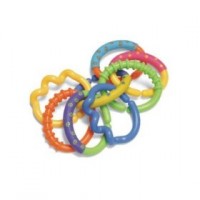
Infantino Ring-A-Links:
Why Colin likes these:
- Simple design, easy for little babies to hold
- Textured for interest
- Hard, but some have a soft rubbery texture, too
- Easy to take anywhere and attach to almost anything to keep them from falling on the ground
- BPA, Phthalate & PVC free
- Very cheap: $2.99-$3.99 at Target/Walmart/BRU/Etc.

Infantino Water-filled Teether:What I like about it:
- Simple and sometimes simple just works so well ;)
- You can put in the fridge to make it cold and its got a very slight texture
- Easy enough for little babies to handle it
- Colin uses this almost daily

Bright Starts Snuggle & Teethe:

Colin likes it sometimes...
- It is soft and makes a crinkle noise when touched
- The feet are a somewhat hard somewhat soft plastic, for teething (Colin doesn't really teethe on them... occasionally he will put them in his mouth but not all that often.)
- Walmart has them for $6 and I think Target is about the same price - maybe a little cheaper.

Fisher Price Monkey Teether:

This one just gets an "Eh..." from Colin:
- Its hard and there is nothing soft on it - not very hospitable for those sore gums
- More of a rattle toy, which he likes for a few seconds at a time
- To be honest, we hardle use it and I'm not even sure where it is at the moment....
- Cheap: $2.99 at Walmart
- BPA, Phthalate & PVC free

One of my absolute FAVORITES:

Nuby Soft Silicone Soother Stage OneAll I could find online was a lame picture of the case... HERE is a link to Walmart's site with a picture of the actual teething toy.

Why Colin (and I) love it:
- It 100% silicone so it is super soft and easy to clean
- It has little massaging nubs/teeth that Colin loves to chew on
- BPA, Phthalate & PVC free
- Comes with a handy plastic case to keep the teether clean while in your bag (since its made of silicone it is a magnet for lint/hair so I appreciate the "sanitary case", as they call it ;)
- Cheap! $3.99 at Walmart

FYI: This teether comes in stages. This one is the stage one, but there are two more stages for the progression of teething depending on which teeth are emerging. Very cool. I think we will eventually get the other two, as well.


Nuby Jiggle & Giggle Vibrating Teether:

Why I like it:
- easy for little hands to hold
- can be chilled in the fridge for comfort teething
- soft silicone side that vibrates when pressed
- very easy for little ones to figure out - within seconds of handing it to Colin, he figured out how to make it vibrate on his gums and held it there for a long time.
- replaceable batteries! It takes one AAA battery, and it includes a battery when you buy it so baby can use it immediately (which is what we needed that morning! lol)
- The product claims to decrease swelling and discomfort associate with teething and from the way Colin loves it & plays with it all the time, I'd have to agree. :)
- BPA, Phthalate & PVC free!

Where you can find it:
Walmart has it the cheapest that I have seen - online it advertises $6.88 but I think I paid $4.99.
Amazon offers it through Kohls but it's $10.

Similar products:
Walmart also sells a Nuby Alligator, Cow and Elephant in the same series with the butterfly. They are each a little different. The Alligator vibrates but doesn't have the cool gel (that I can see).


A friend of mine recommended this option & her baby loves it:

Infantino Vibrating Teether (Strawberry or Grapes)Why I like the Nuby brand a little more:
- Nuby is Cheaper. What can I say? This teether is not that much more, though. I think I've seen it as low as $7-8 at Walmart/Target. BRU & BuyBuy Baby also carry it. Amazon has it for *gulp* $14, but I'd look elsewhere. ;)
- Heavier than the Nuby vibrating teether.
- Can't replace the batteries so if your baby likes it enough to run the batteries out, you would have to buy a whole new one.

RazBaby Razberry Teether:
My friend recommended this one so I'm just going off what she told me:

- Made of 100% medical grade silicone, so its soft and you can put it in the fridge to make it cold
- Similar to a pacifier so its easy for young babies to use and figure out
- Interesting texture for baby to gum
- Walmart has a 2-pack for $6. Amazon sells the 2-pack for $8.80.
- BPA, Phthalate & PVC free!

Something to consider:
When I was reading reviews on Amazon, one caught my attention (you can read it HERE). A mom claimed that her 5.5 month old was able to get the Razberry teether in his mouth sideways and began choking. She claims this is because the teether is made of soft silicone and therefore pliable. I am not an alarmist, and my gut tells me she might be over reacting on the choking part, but I thought I should share just to be on the safe side. I think its always prudent to keep a close eye on little ones, no matter what they are playing with.

Another teething toy Colin really enjoys is the Nuby Bug-A-Loop:
Why I like it:

- Like nearly every product I've seen that Nuby makes, it is BPA, PVC and Phthalate free.
- Soft rubbery beads for soothing sore gums
- Easy for little babies (4-5 months) to hold and bring to their mouth
- Relatively inexpensive: $6.42 on Amazon

Another recommendation from a friend - Sassy Beginning Bites Teether:


What she likes about them:

- Easy for little ones to hold and play with
- Soft rubbery toy to chew
- Can be placed in the fridge for a cool teething soother
- Pretty inexpensive: Walmart sells it in a 4-pack with some other rattle toys for $14.98. BRU has the 2-pack for $4.99.

Something to consider:

- Sassy infant toys are all BPA free and Phthalate free if made after 2008.

Thursday, June 30, 2011

Which Baby Products Are Safe?

I was talking to a friend of mine, who is a nurse and she mentioned that I shouldn't put sunscreen on my baby till he is at least 6 months. Weird. "Why?", I asked. She said that there are chemicals that could be irritating to the baby's skin, or even be dangerous... That got me thinking. What exactly is in the baby products that I use?

I found this website that lists products (I've been able to find everything we use) and you can search them to see if the products you use are considered safe, have lower levels of chemicals and other carcinogenic properties, allergens, etc.

HERE is the link.

I don't mean to cause unnecessary concern, but I like the quote by Maya Angelou "Now that I know better, I do better". I'm using up the products that I have, but once they are gone, I'll probably be more selective about certain things I get for Colin, like his body wash/shampoo, lotions, bug spray, etc... If I can limit the harmful substances that he comes in contact with, I try to. Just passing along the info - hope it helps!

Friday, June 17, 2011

RENT a baby carrier to see if you like it :o)

There are SO many options out there for baby carriers. Some are better than others. Then there are many great choices, but it just comes down to personal preference... Are you tall? thin? have an older baby? more than one child? need versatility? need something easy and quick to use?

There is no "magic" baby carrier that works for everyone, all the time, in my humble opinion. But there are some carriers that work better for some and in certain situations. You may find that as baby grows, your preference changes.

If budget is important (I know for me, it is!) then there are some great tools to help with carrier purchases to keep cost lower.

1) See if you can borrow from a friend that has a carrier you like. Maybe they will even sell it to you for a lower price, since its used, or you could kinda "rent" from them for a small amount of money.

2) Look on Craigslist or other on-line sites for used carriers. Most carriers are washable and hold up well after lots of use so even if its been used for one or two babies, it likely still has lots of life left in it. You can usually save more than 50% this way.

3) Try renting a carrier before you commit to buying. That way you know you like it (or don't like it) before you are out the money. Good carriers usually cost between $50-150 (some a little more, some a little less) so it helps to be SURE you like it. GRANOLA BABIES is a great website that allows you to rent a carrier for $10 (the cost of shipping) with a deposit. Once you return the carrier, after trying it out, the deposit becomes an in store credit you can use towards any carrier. HEAVENLY HOLDS is another website that lets you rent before you commit.

4) For simple carriers, you can find templates on-line to make your own! If you are pretty good at sewing, you can make a wrap or sling type carrier, usually for less than $25.

5) Check out on-line stores like Zulily or Babyhalfoff to find great discounted deals on lots of baby stuff. Sales change daily and are limited. Many times there will be deep discounts on versions that are being discontinued. This may mean major or minor changes to the product... just depends.


It can be overwhelming trying to find the right thing at the right price. Try to be patient and ask lots of questions.

I've also found that great support websites help where you can talk to other Moms who have tried the carrier you're interested in and can answer questions. TheBabyWearer.com is a great resource as is Diaperswappers.com with a forum devoted just to baby wearing.

Good luck! I hope this helps!

Tuesday, June 14, 2011

Baby Wearing - GREAT INFO!!!

I just found this awesome website by a really neat lady named Kristi and it has TONS of great info on baby wearing.

She shares tips, tricks, and safety info. She also tells you which carriers are great and which ones should be avoided (like the plague!) and she gives good reviews. I seriously can't say enough great things about this website. Go check it out for yourself!

http://betterbabywearing.blogspot.com/2010/03/babyweaing-overload.html

I also learned quite a bit about wearing baby safely. Not all carriers are designed well and may be harmful to baby's spine. I had no idea...

Here is some more info on that: http://www.sleepywrap.com/2008/11/ha...t-in-carriers/

And here is more on baby wearing safety for baby: http://www.continuum-concept.org/rea...nalStress.html

From the blog post (at the top) I learned that the Infantino and Bjorn brands have a narrow seat that puts baby in an unsafe position and is not good for their little developing spine. I obviously didn't know that and used an infantino when Colin was just a newbie...


(I think he was about 3 weeks in this picture)

I also have the Moby Wrap, which is a safe wrap style carrier that is great for use with tiny newborns, from 8 to 35 lbs

(This is Colin at 5 weeks in the Moby - He loved it and would usually fall asleep in it! He still loves it, even now!)

(This is Colin in the Moby, under my coat, at 3.5 months)

Oh, and be careful about buying baby carriers that are "homemade" or from ETSY shops/Ebay. I'm not trying to say anything bad about ETSY - I love it and have found lots of great things there - you just have to be careful about buying something that will be holding your baby... it needs to be made REALLY well and there are safety designs that not all makers follow. Just FYI.

Good luck and happy baby wearing!!!

Monday, May 23, 2011

A Wake Up Story...

I don't know about you, but ever since I found out I was pregnant, I started becoming more aware of what I was putting in my body. I knew everything that entered me, could effect my growing baby, for good or for bad. Once he was born, the awareness didn't cease. I became more aware. More concerned. I worry about what chemicals are in his environment, even in our home, that might be harmful.

I've been reading a lot about SIDS, too. Mostly because I want to know more about it. Also, I have a hard time believing that the answer to preventing SIDS is as simple as placing babies on their backs to sleep. Why, then, do most babies prefer to sleep on their tummies? That seems to defy nature since babies should tend to prefer what is safest for them and will promote survival. I've also found studies that link back sleeping to other problems.... (http://www.ncbi.nlm.nih.gov/pmc/articles/PMC1595182/?tool=pmcentrez)

I'm not saying there isn't validity to the "back to sleep" movement, I'm just questioning, because that's what I do. :)

I want to understand more. To understand more, you question what is "known" and you go from there.

From what I've found, it seems that SIDS is, for the most part, not fully understood. Scientists don't really know 100% what causes it or how to prevent it. There seems to have been a downward trend in SIDS cases since Pediatricians promoted the "Back to Sleep" campaign in the early 90's but there was also a dramatic shift in defining SIDS at that same time and therefore more infant deaths were categorized as "suffocation", "murder" or even "related to other health problems".

These are a few studies I did find. They are all from Pub Med and have been published in quality peer reviewed journals. Always look in well respected peer reviewed journals and focus on studies that are large and randomized. Also, keep in mind that if you do not have a PhD in the subject matter, you will likely be overwhelmed and confused. That is normal. I do not have a PhD and even with a medical background, I find many studies I read to be cumbersome and difficult to understand fully. Most doctors feel this way, too (whether they admit it or not) and that's normal. This is kind of a soap-box-issue for me, but I think we tend to expect too much from doctors. They can't know everything. We can all try to be more educated, though. Its a worthwhile effort to make (I think, anyway).

This one is small. What some researchers would call a "pre-study", but it is interesting, none the less. http://www.ncbi.nlm.nih.gov/pubmed/20092400

This is a "retrospective study" or review of previously collected information. Not truly conclusive but also interesting as a stepping stone towards more research. http://www.ncbi.nlm.nih.gov/pubmed/19414432

This is a "pre-research study" in the gathering information phase. It is worth noting, though, because it is focused on how babies sleeping in the prone (tummy) position may be more susceptible to toxic bacteria exposure. So, if the baby's sleeping arrangement was safer and less prone to bacterial/fungal growth which promotes a toxic environment for the sleeping infant, would it be safe for babies to sleep on their tummies? No conclusions have been made at this time. I would love to see the follow-up on this, though. http://www.ncbi.nlm.nih.gov/pubmed/10443485

Again... not conclusive but interesting points made on the role of bacterial toxins, smoking and genetics all playing a role in the cause of SIDS. http://www.ncbi.nlm.nih.gov/pubmed/10335950

I could list more but the list would go on and on and there really isn't an answer.... So, I'll let you check it out on your own. ;) PUB MED

So, because there are so many variables, it is hard to pinpoint the reason for the decrease in SIDS in the early 90's. And scientists have their hands tied in doing rigorous scientific method-type studies because this would involve infants dying and that would be unethical to allow that to happen. So.... the questions keep piling up and the answers fall short.

In my quest to understand more about SIDS, I stumbled upon an interesting theory. A Chemist in New Zealand hypothesized that babies were dying of SIDS or "Cot Death" not simply because they were on their tummies but because they were sleeping on mattresses that were emitting toxic chemicals that the babies were breathing in which compromised their neurological behavior which stimulates breathing and heart rate regulation. The babies on their tummies were at a higher risk, not because of their tummy sleeping in-and-of-itself, but because this put them closer to the toxic fumes being emitted and thus inhaled. He theorized that the babies on their backs had better air circulation and thus less susceptibility to the toxins. He published his theories and findings in a book and led a campaign in New Zealand for higher safety standards for the manufacturing of infant mattresses.

This made me start to wonder about the mattress my own baby was sleeping on....

I was already interested in getting a newer mattress (the one I have was given to us, generously, but who knows how old it is...) and I was already looking at organic mattresses because I had heard people talking about "all the chemicals in mattresses" so I was concerned.

When I started looking, however, I became increasingly surprised at how few options there truly were for 100% organic crib mattresses.... I could only find one! All the others toting the "organic" label were only part organic (sometimes as little as 5%) and the rest was still full of toxic and potentially toxic chemicals. Did you know that when you buy a new mattress, it is recommended to let the mattress "off-gas" for about a month before using it?! I had no idea!

Here is a link to the Naturepedic website (they make organic crib mattresses) http://www.naturepedic.com/newmom/ebook-naturepedic-crib-mattresses.pdf

Have you ever noticed that nice "new car smell"? That is also known as "off-gasing" and it is literally the release of chemicals into the air from the synthetic (also known as "man made") product.... Whoa. That shocked me.

So... I find myself a little unsure where to turn at this point. I don't want to be one of those parents that is ultra paranoid about every little thing that comes near my child. I don't see myself that way.

I believe that our bodies were created to withstand a lot of toxins and to filter them out just fine. On the flip side, I do believe, as has been evidenced by modern science, that too much toxic exposure is overwhelming to the body and has very negative effects. That's why we see an increase in cancer. That's why people are concerned about the nuclear power plants in Japan after the Tsunami. That's why the FDA regulates consumer products (although, probably not strictly enough) and this is why we should all be careful and educated consumers.

For me, I don't plan on letting myself be overwhelmed by the truth that there are toxic chemicals in our everyday environment. I do, however, plan on making a few changes, continuing to educate myself and I will do my best to limit the large amounts of chemicals we are exposed to daily.

I plan on getting a new mattress that I feel is safe for my baby, because he spends upwards of 12-14 hours a day sleeping on it. I also try to buy toys and dishes that are BPA-free. Occasionally he will have a toy that is not. I'm not going to stress about it. You can't avoid every bad thing in this world, but you can drive yourself nuts trying, in my opinion.

I want to avoid the things that I feel are dangerous but I'm not going to stop "living" or move us all into a "bubble". I just don't think that is realistic or healthy.

This is a video I found at: awakeupstory.org

I thought it was interesting and worth paying attention to.


These are my thoughts. If you have any to share, or helpful ideas/information, I would really love to hear it!

May we all be happy and healthy. :)